PDF Download Algorithms for Visual Design Using the Processing Language
When obtaining this publication Algorithms For Visual Design Using The Processing Language as reference to review, you can acquire not just motivation however likewise new expertise and driving lessons. It has more compared to typical advantages to take. What type of book that you read it will be useful for you? So, why ought to obtain this publication entitled Algorithms For Visual Design Using The Processing Language in this article? As in link download, you could obtain the book Algorithms For Visual Design Using The Processing Language by online.
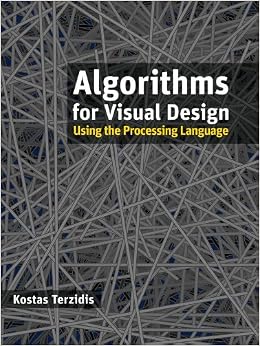
Algorithms for Visual Design Using the Processing Language

PDF Download Algorithms for Visual Design Using the Processing Language
If you are still back to back to locate the appropriate publication to review, we have provided a terrific book as candidates. Algorithms For Visual Design Using The Processing Language as one of the referred books in this short article can be taken pleasure in now. It is not only concerning the title that is very intriguing and also draws in people ahead reading it. And why we provide this book to you is that it will certainly be your friend along your leisure time.
Yet here, we will reveal you amazing point to be able consistently review the book Algorithms For Visual Design Using The Processing Language anywhere and whenever you happen and time. Guide Algorithms For Visual Design Using The Processing Language by just could aid you to realize having the e-book to review every single time. It won't obligate you to consistently bring the thick e-book anywhere you go. You could just maintain them on the gadget or on soft documents in your computer system to consistently check out the area during that time.
As understood, to complete this book, you might not have to get it at once in a day. Doing the activities along the day may make you feel so bored. If you attempt to compel reading, you may prefer to do other amusing activities. Yet, one of principles we want you to have this book is that it will certainly not make you really feel bored. Really feeling burnt out when reviewing will certainly be just unless you don't such as guide. Algorithms For Visual Design Using The Processing Language actually supplies what everyone desires.
What kind of publication Algorithms For Visual Design Using The Processing Language you will like to? Now, you will certainly not take the printed publication. It is your time to obtain soft file publication Algorithms For Visual Design Using The Processing Language instead the published records. You could enjoy this soft documents Algorithms For Visual Design Using The Processing Language in at any time you expect. Also it is in anticipated place as the various other do, you can check out guide Algorithms For Visual Design Using The Processing Language in your gizmo. Or if you want much more, you could read on your computer system or laptop computer to get full screen leading. Juts discover it right here by downloading and install the soft data Algorithms For Visual Design Using The Processing Language in web link web page.
From the Back Cover
Experiment with design problems to create 3D animations, GUIs, and more Are you ready to dramatically enhance your programming skills by experimenting with design problems in the digital domain? Kostas Terzidis shows you a series of generic procedures that serve as building blocks for you to test, explore, or channel your ideas and principles into solutions. He uses the Processing computer language to walk you through advanced algorithms and techniques. You'll then gain a strong understanding of the complexity involved in today's design problems as you construct your own customized algorithms. Develop geometric entities and combine the elements into complex shapes Design graphical user interfaces using standard library components and connect them to geometrical actions Process images as an alteration of a local area or as a global effect in the form of a filter Build single and multiple animated objects as well as simulate dynamic behavior Produce the behavior of a 3D object rotating in space Create the impression of a continuous surface out of discrete points Use, connect, and control devices in the form of feed, feedback, and multiple feedback systems
Read more
About the Author
Kostas Terzidis is an associate professor at Harvard University's Graduate School of Design. He is an educator, designer, theorist, architect, and computer scientist. His professional work includes software development for Java media framework and Linux as a software engineer for AOL. Terzidis is also the author of three previous books.
Read more
Product details
Hardcover: 384 pages
Publisher: Wiley; 1 edition (May 11, 2009)
Language: English
ISBN-10: 9780470375488
ISBN-13: 978-0470375488
ASIN: 0470375485
Product Dimensions:
7.4 x 1.2 x 9.4 inches
Shipping Weight: 1.6 pounds (View shipping rates and policies)
Average Customer Review:
3.5 out of 5 stars
4 customer reviews
Amazon Best Sellers Rank:
#1,392,765 in Books (See Top 100 in Books)
I pre-ordered this book thinking (from the title and from Terzidis's bio) that it would be a book on advanced visual design algorithms. You'd think that a book with "algorithms" in the title would put an emphasis on optimizing techniques for difficult problems - it doesn't. I didn't get to peruse the table of contents before purchase, and now I wish that I had, because it covers a lot of the same information as other books I own (Learning Processing: A Beginner's Guide to Programming Images, Animation, and Interaction (Morgan Kaufmann Series in Computer Graphics),Processing: A Programming Handbook for Visual Designers and Artists,Visualizing Data: Exploring and Explaining Data with the Processing Environment, and Processing: Creative Coding and Computational Art (Foundation)).If you need a book that will have algorithms to find intersections between lines and bezier curves, 2d and 3d collision detection between irregular shapes, how to utilize vector files with soft body dynamics in processing, or how to efficiently time shift video on a pixel-by-pixel or line-by-line basis; if you need a book that will be like Introduction to Algorithms for visual design in processing, you'll have to keep waiting.If, however, you are looking for a more in-depth discussion of issues about at level of the examples included with processing, then you're in a right place, if not THE right place. Like almost all the books mentioned above, this book doesn't take for granted that you're experienced with processing (even the operators are explained in the first chapter). All the lessons are explained well, and in addition, there's even a nod to other issues such as physical computing with arduino. There are questions at the end of each section, and answers in the back of the book. At this time, I'd recommend it about as much as I'd recommend each of the books above except Shiffman's, which I consider the best introductory text on Processing.
I have Casey Reas', Ira Greenberg's and Ben Fry's books on my shelf and I am familiar with Daniel Shiffman's online material. All of these books fill a niche, and so does Kostas Terzidis' Algorithms for Visual Design. The author's approach comes out of architecture with a focus on spatialization, surface, texture, solid geometry, 3D space, movement, with introductions to texture generating algorithms such as Voronoi tesselations, stochastic search, fractals, cellular automata, and genetic algorithms. all specific to the field. The book also introduces references including an overview of the language, basics of graphical user interfaces, bitwise operations for image processing, file I/O and external interactions through various control devices. The code for each assignment is available at [...]This is an excellent introductory book for beginning students who are starting out in computational visual design and want to achieve results and have an overview command of programming, in 10 chapters. It is therefore an ideal course book. This book falls in line with Terzidis' more theoretical books on algorithmic architecture such as "expressive Form: A Conceptual Approach to Computational Design" and "Algorithmic Architecture". The author holds degrees in Engineering, and Architecture, and is a professor at Harvard's Graduate School of Design, and has previously taught at UCLA School of Architecture.
It arrived on time and was an excellent product.
I would agree that this book is a lot less advanced than I was expecting but what makes it worse it the mistakes and lack of understanding by the author into many of the topics covered. For example when discussing fractals he makes the mistake of mixing up one way of generating a fractal with the definition of the class of fractals themselves. He even gets wrong the derivation of the name failing to mention it is anything to do with fractional dimensions. Other topics are equally well misunderstood in the authors mind.However the worst aspect of the authors ignorance is when he strays into physical computing. His facts are not only wrong but examples and projects will lead people to permanently damage their Arduino boards if carried out. For example he states that circuits are made by welding together wires on a silicon board. This is patently rubbish, circuits are made by soldering together components onto a printed circuit board normally made of fibre glass. He gets the definition of why it is called a micro controller wrong and there are practical errors too. The section on LEDs fails to mention they need current limiting resistors and the example project given only works because there is an internal series resistor on the single type of Arduino board he used. Anyone attempting the same project and using another pin or board will permanently damage their Arduino. Similarly the sound transducer is shown correctly with a current limiting resistor but then he fails to use this in another project that combines two pieces of hardware.All in all he give the feeling that he has attended a course on how to use Processing and the Arduino, he has incompletely understood it, and then thinks he is qualified to write a book. Not good enough!
Algorithms for Visual Design Using the Processing Language PDF
Algorithms for Visual Design Using the Processing Language EPub
Algorithms for Visual Design Using the Processing Language Doc
Algorithms for Visual Design Using the Processing Language iBooks
Algorithms for Visual Design Using the Processing Language rtf
Algorithms for Visual Design Using the Processing Language Mobipocket
Algorithms for Visual Design Using the Processing Language Kindle

Tidak ada komentar :
Posting Komentar